CAPTCHA insights for developers
A verification flow needs to work for the people using it. These articles explore the tradeoffs behind challenge design, testing, and measuring results.
28 articles · Most recently published first
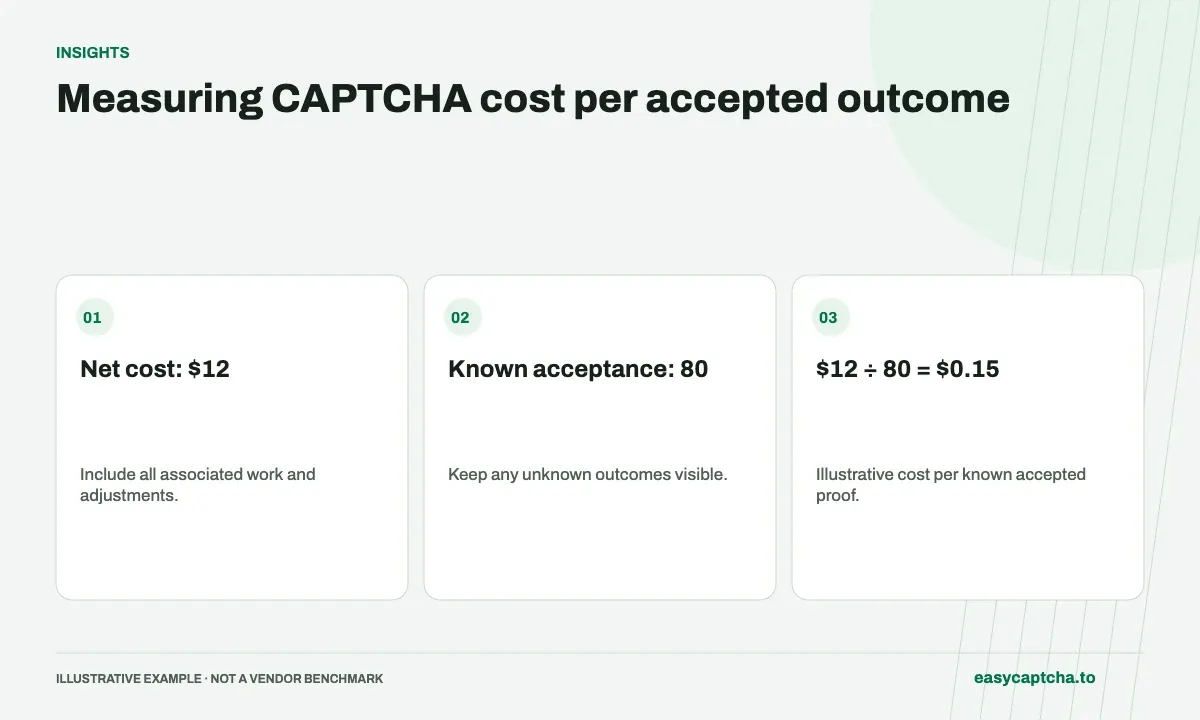 Cost analysis
Measuring CAPTCHA cost per accepted outcome
Account for all admitted work, unknown results, mode multipliers, and adjustments when calculating the cost of a completed application action.
Read article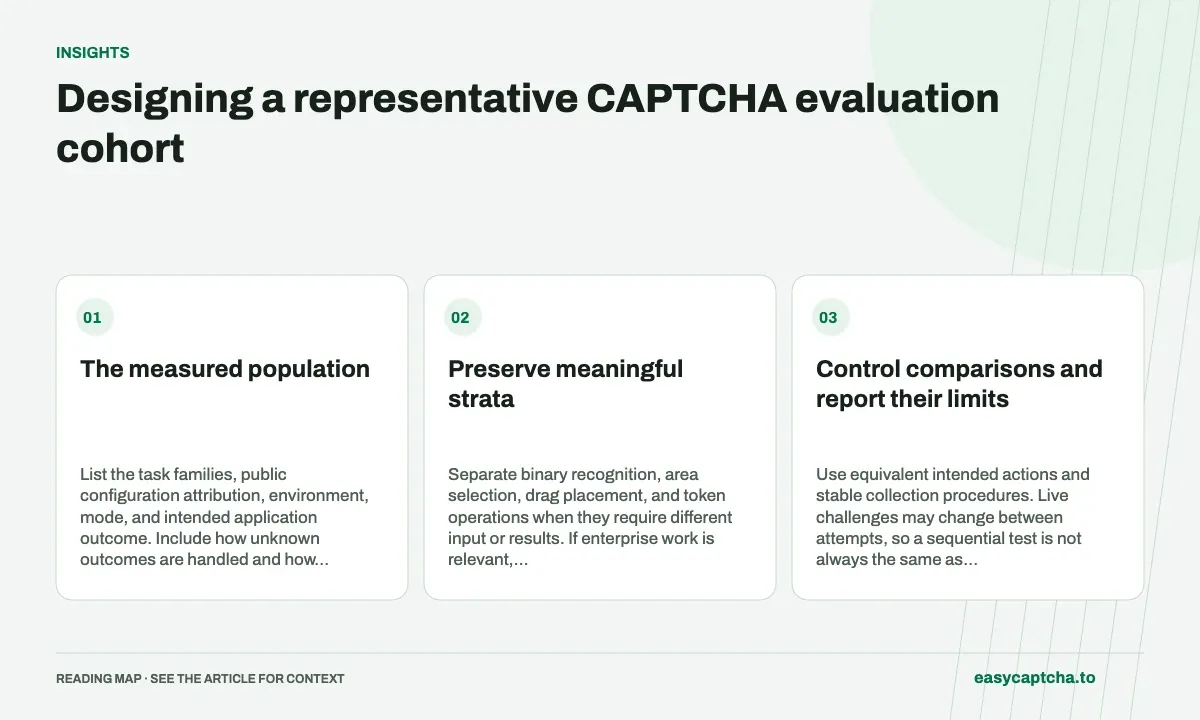 Evaluation design
Designing a representative CAPTCHA evaluation cohort
Choose task families, site configurations, variants, and observation windows before comparing completion or acceptance rates.
Read article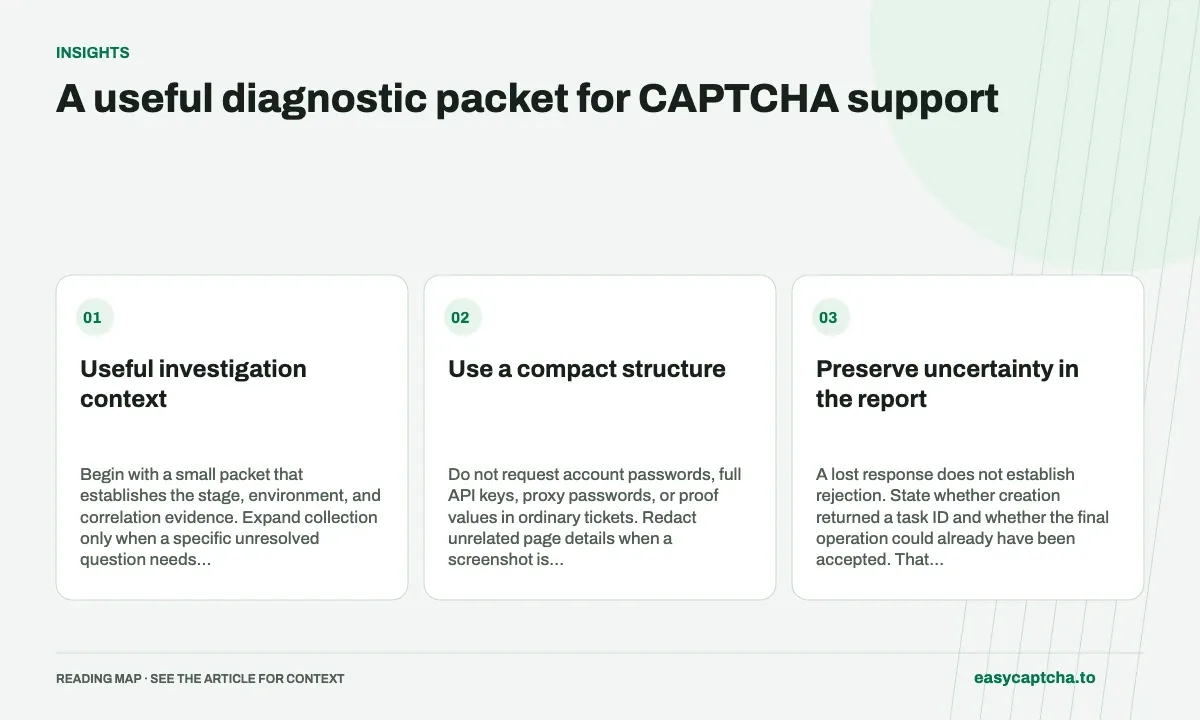 Operations
A useful diagnostic packet for CAPTCHA support
Collect the failure stage, limited identifiers, versions, and known acceptance state instead of asking for credentials or an entire private form.
Read article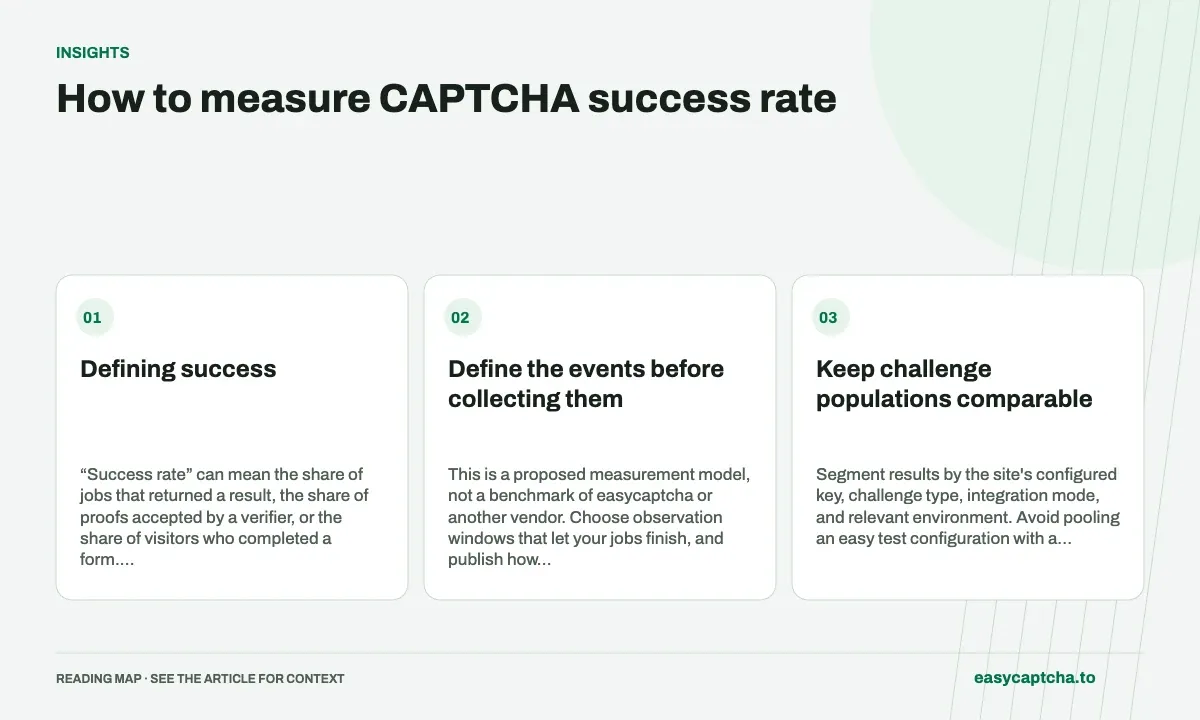 Measurement
How to measure CAPTCHA success rate
Separate solver completion, verification acceptance, and user completion. Compare CAPTCHA outcomes by sitekey, challenge type, latency, and cost.
Read article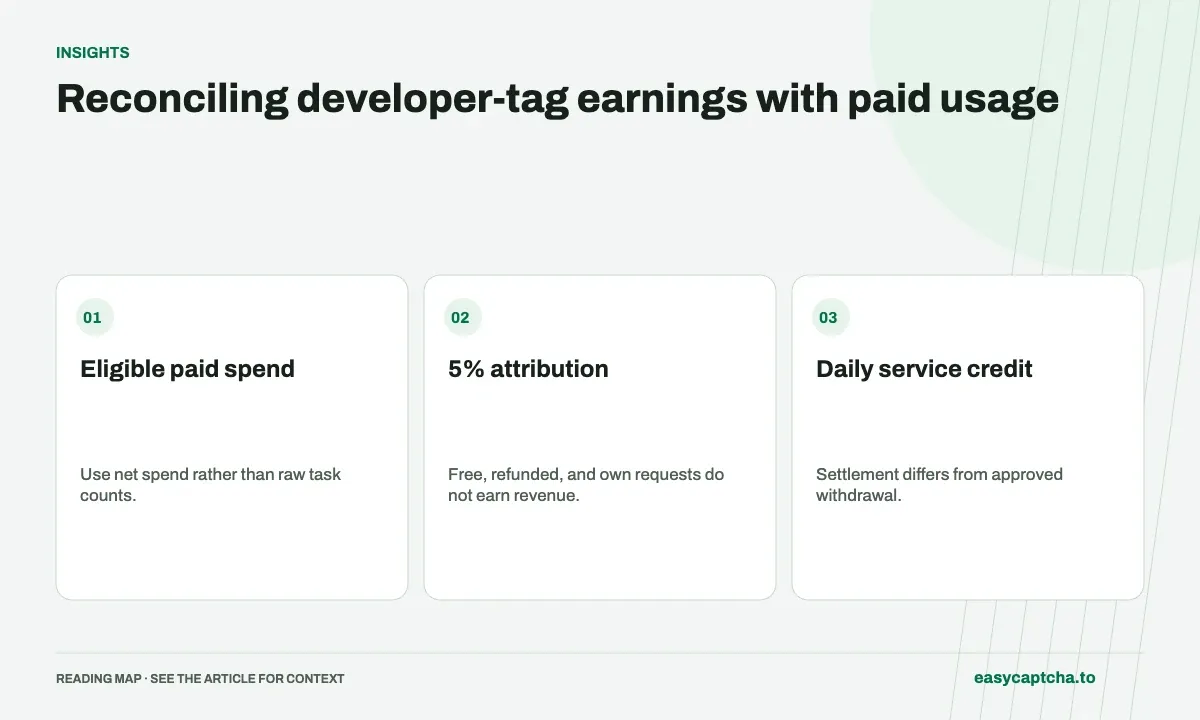 Program analysis
Reconciling developer-tag earnings with paid usage
Use eligible paid spend, attribution, reversals, and daily settlements to explain earnings instead of multiplying raw job counts by an assumed price.
Read article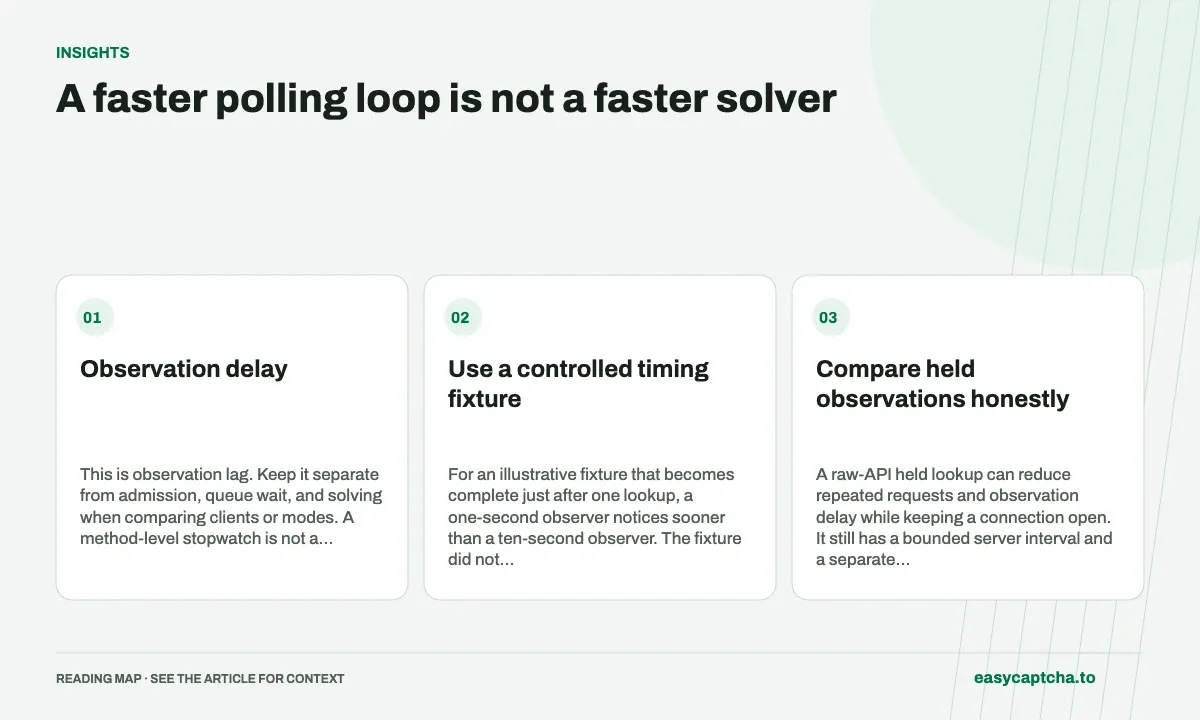 Latency analysis
A faster polling loop is not a faster solver
Measure the delay between remote completion and local observation before attributing latency changes to recognition or worker scheduling.
Read article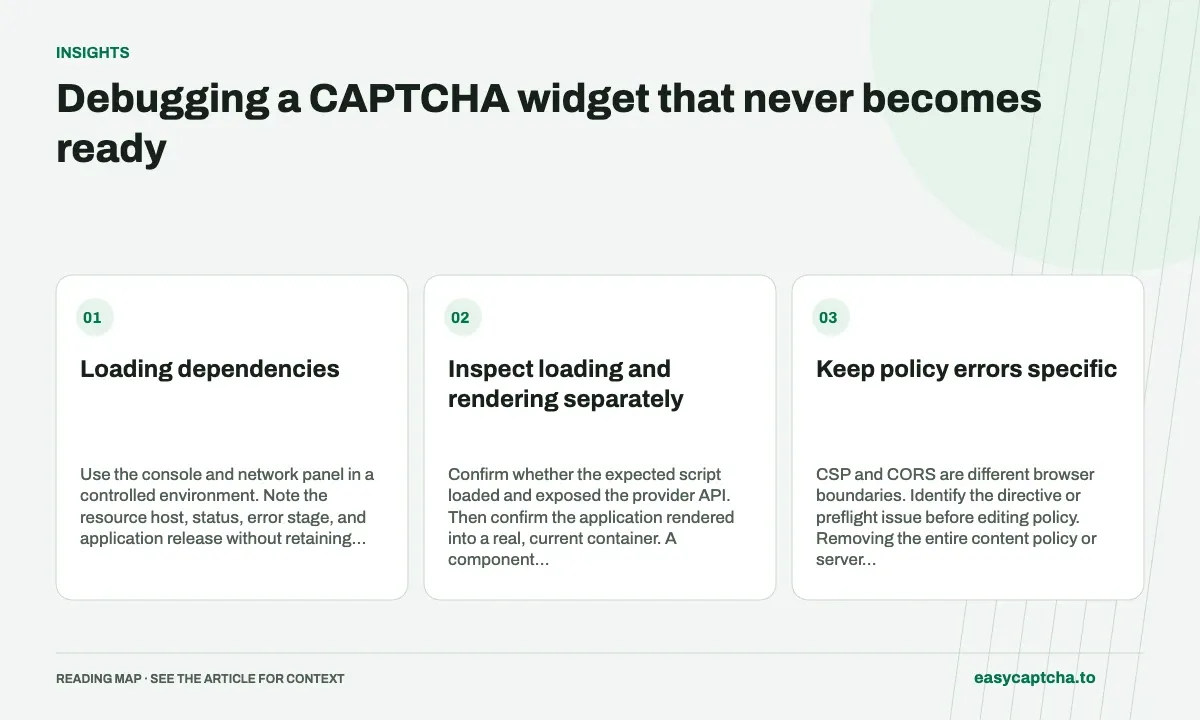 Troubleshooting
Debugging a CAPTCHA widget that never becomes ready
Separate script loading, policy errors, render lifecycle, configuration, and server verification before changing the application’s security controls.
Read article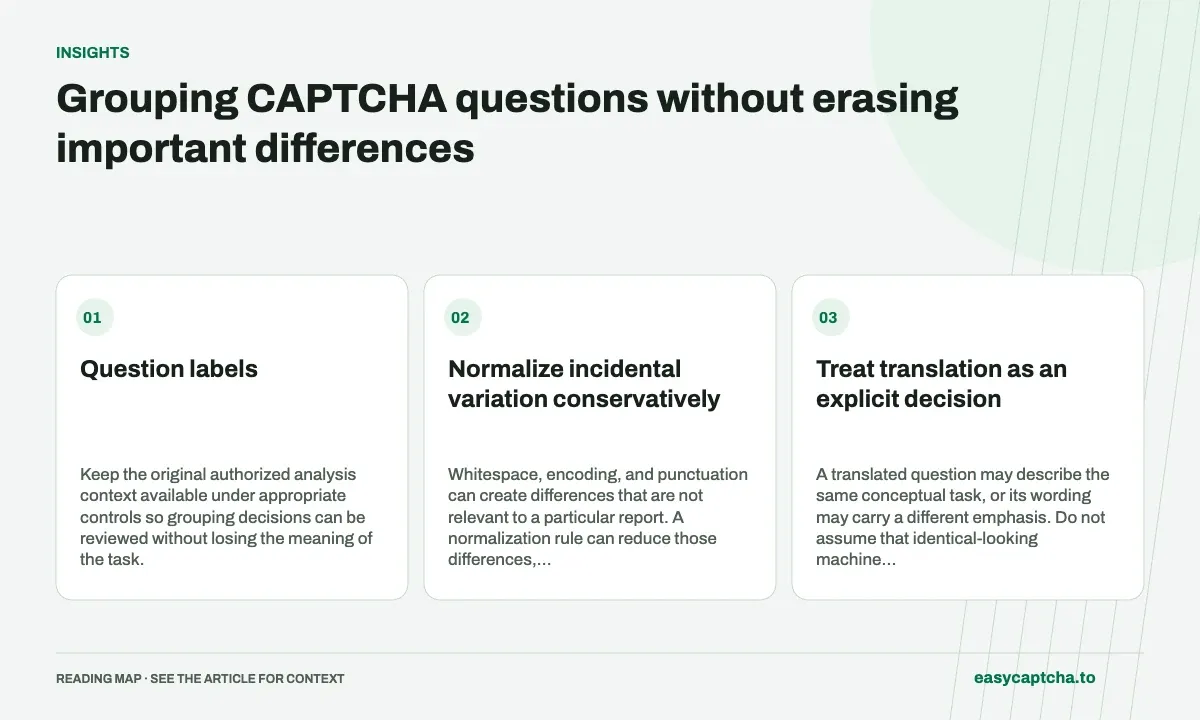 Challenge analysis
Grouping CAPTCHA questions without erasing important differences
Normalize incidental text variation carefully and preserve a path for meaningful instructions, languages, and visual variants to remain distinguishable.
Read article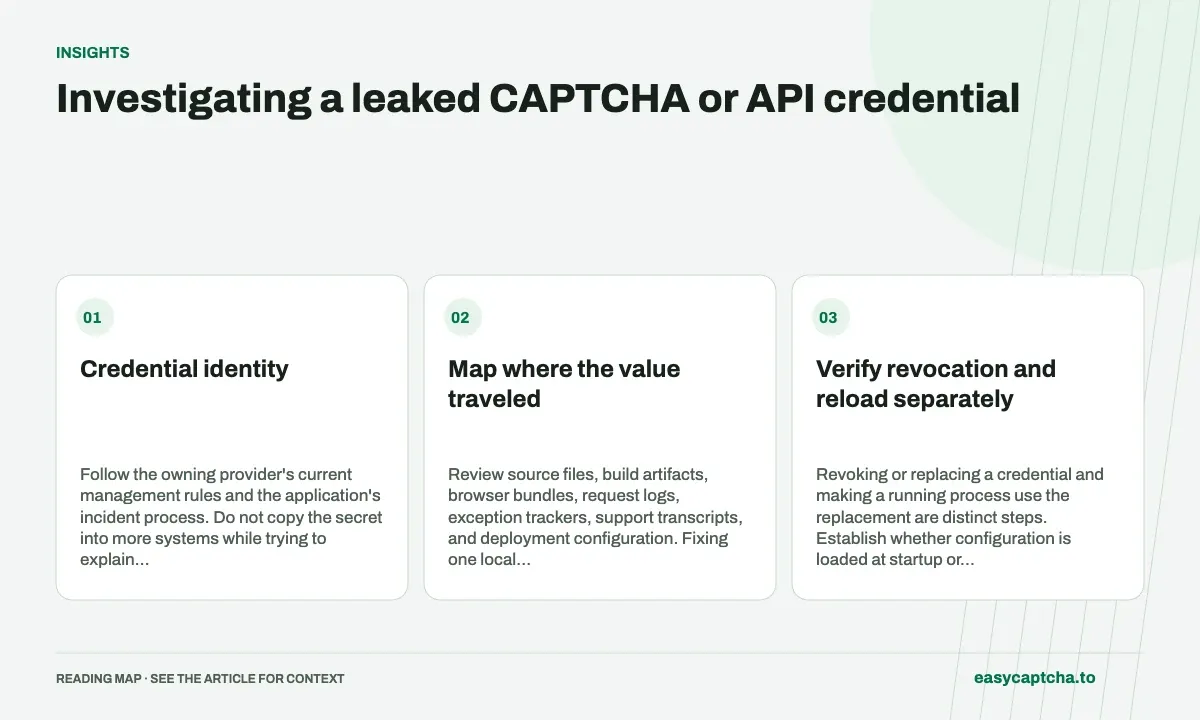 Operations
Investigating a leaked CAPTCHA or API credential
Identify credential ownership, exposed destinations, revocation, and configuration reload without spreading the secret into more logs or tickets.
Read article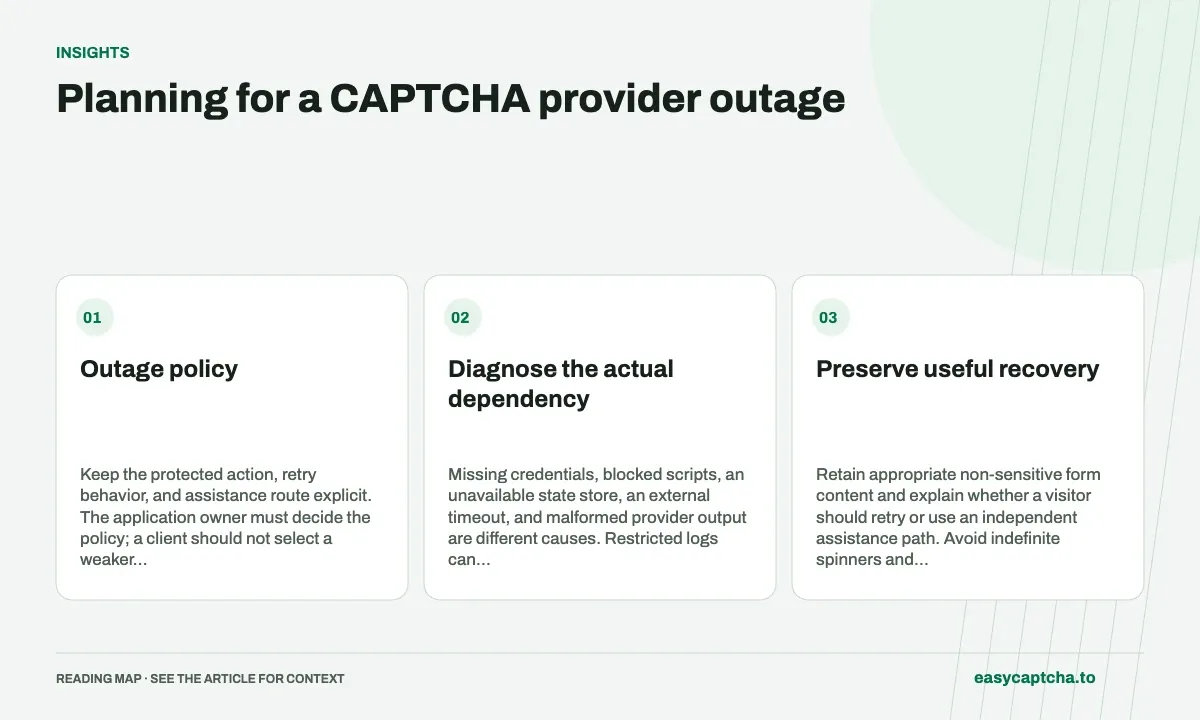 Operations
Planning for a CAPTCHA provider outage
Keep server policy enforced, visitors informed, and operational diagnosis distinct when a verifier becomes unavailable.
Read article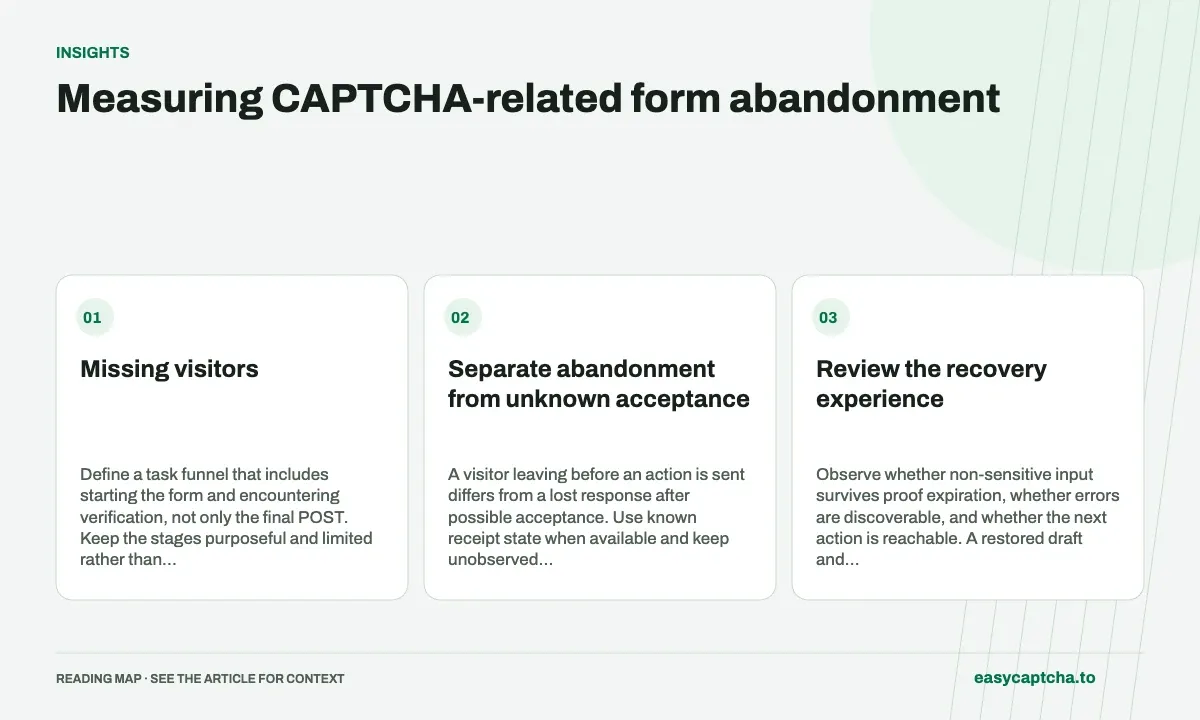 User experience
Measuring CAPTCHA-related form abandonment
Observe starts, progress, verification, recovery, and receipts so visitors who disappear before submission do not vanish from the analysis.
Read article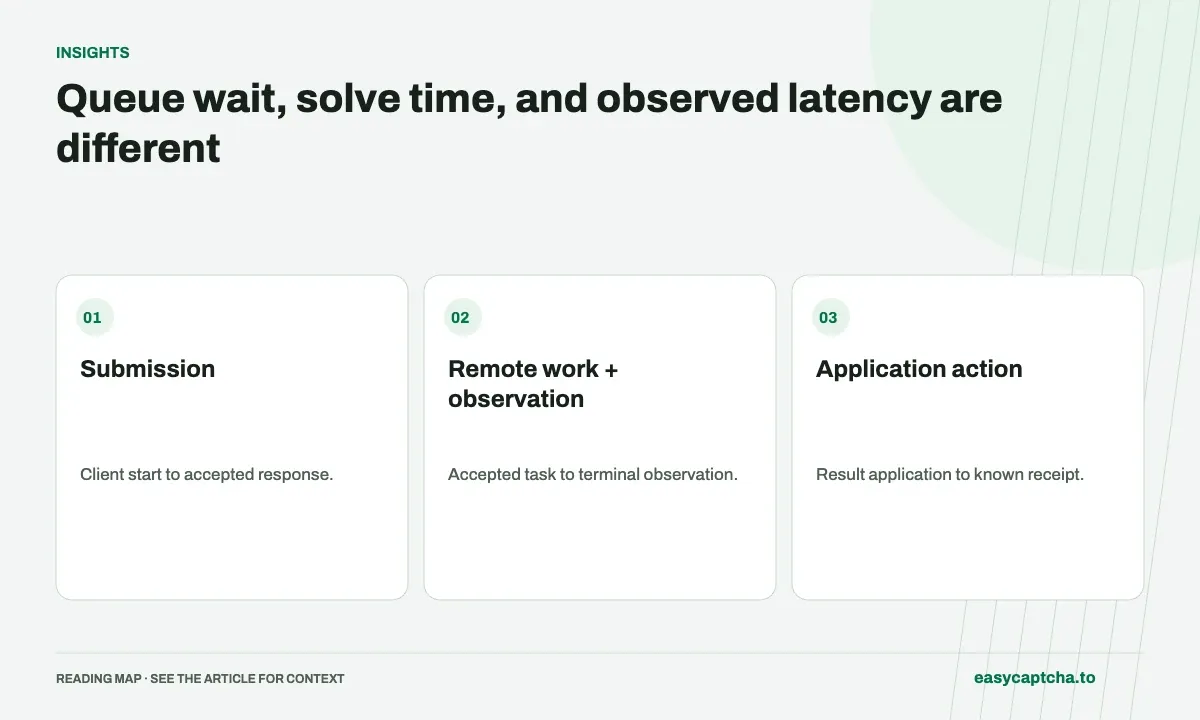 Latency analysis
Queue wait, solve time, and observed latency are different
Break completion time into admission, remote work, observation, and application stages before deciding which scheduling change helped.
Read article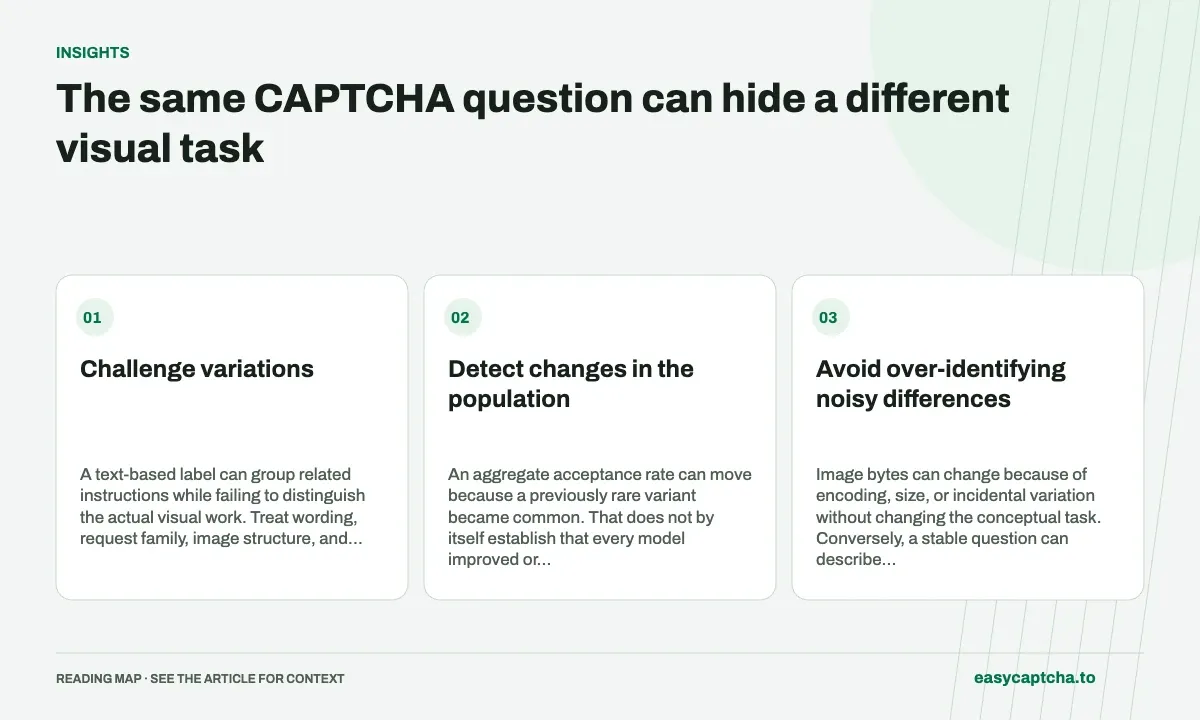 Challenge analysis
The same CAPTCHA question can hide a different visual task
Separate instruction wording from image variants and cohort changes before interpreting a shift in recognition outcomes.
Read article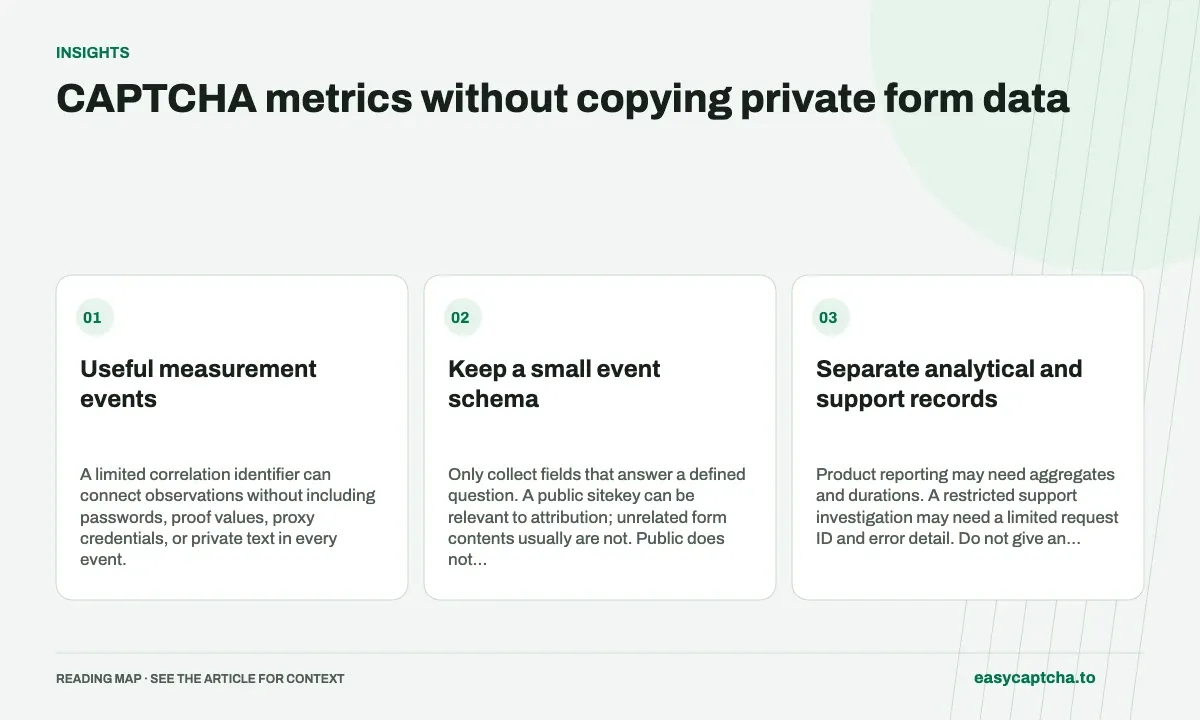 Measurement
CAPTCHA metrics without copying private form data
Build a compact event model for outcome analysis, keeping credentials, proofs, and sensitive form contents out of ordinary analytics.
Read article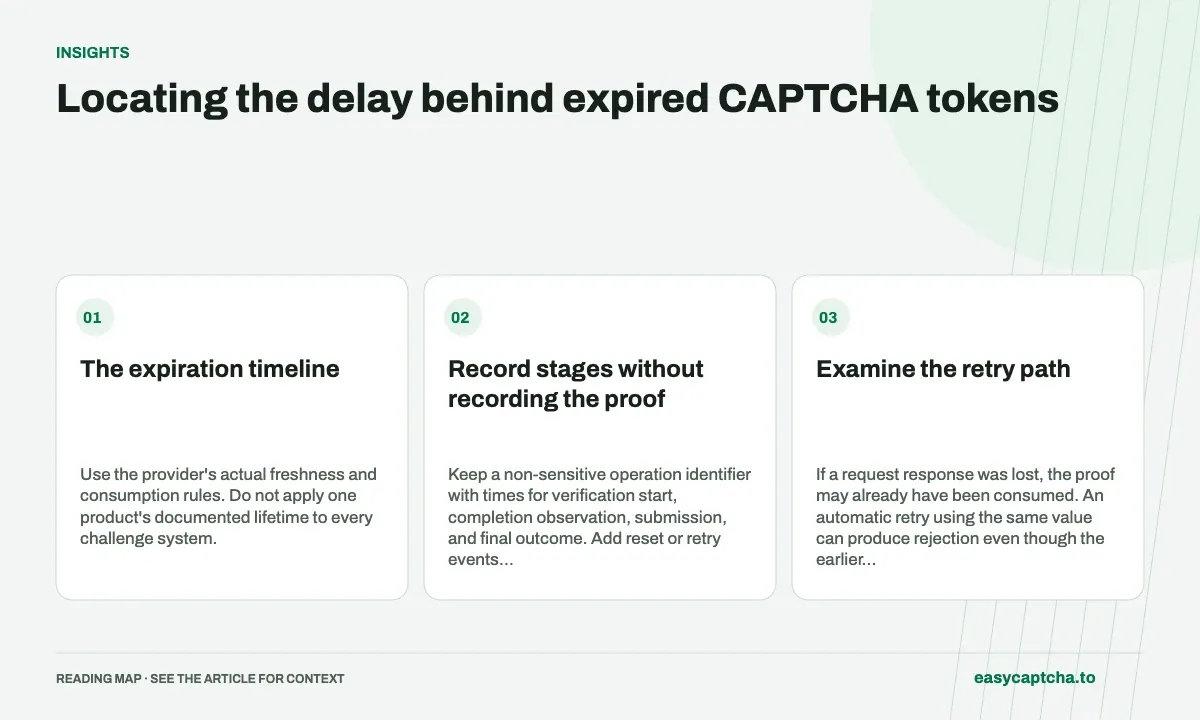 Troubleshooting
Locating the delay behind expired CAPTCHA tokens
Track when a proof is obtained, held, submitted, and retried so an expiration problem is fixed in the workflow rather than hidden by duplicate solving.
Read article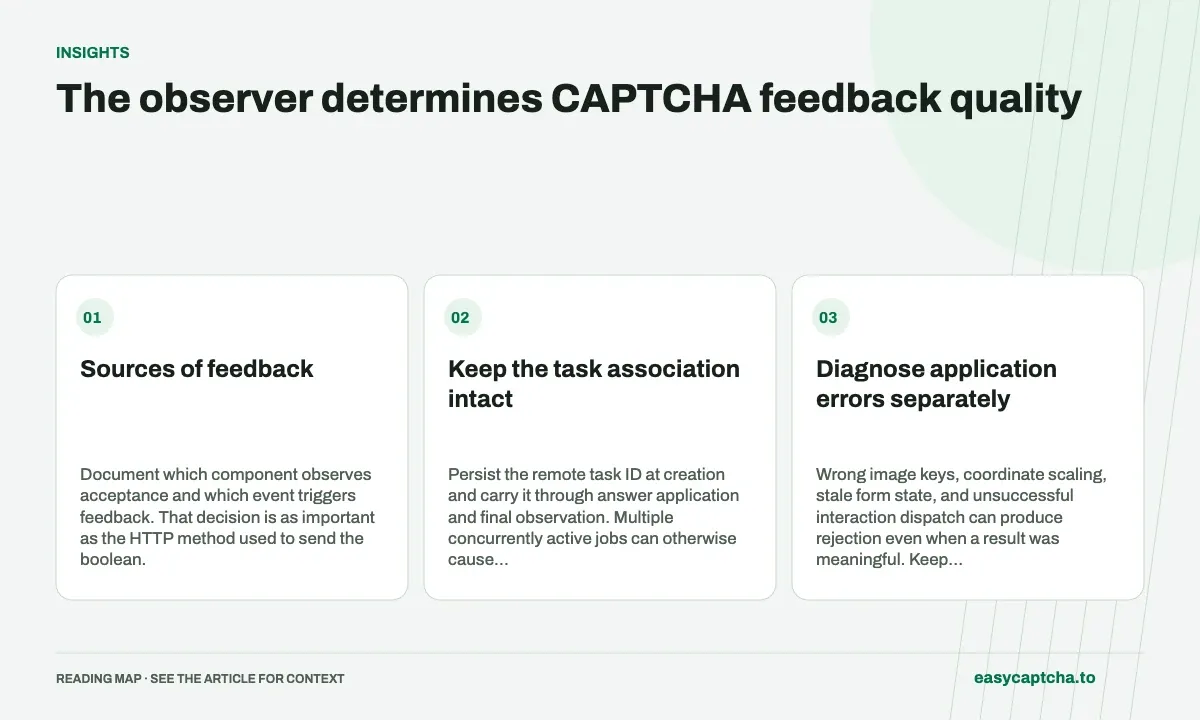 Measurement
The observer determines CAPTCHA feedback quality
Report actual acceptance with known task identity, and keep mapping bugs, transport errors, and unobserved outcomes from contaminating solver feedback.
Read article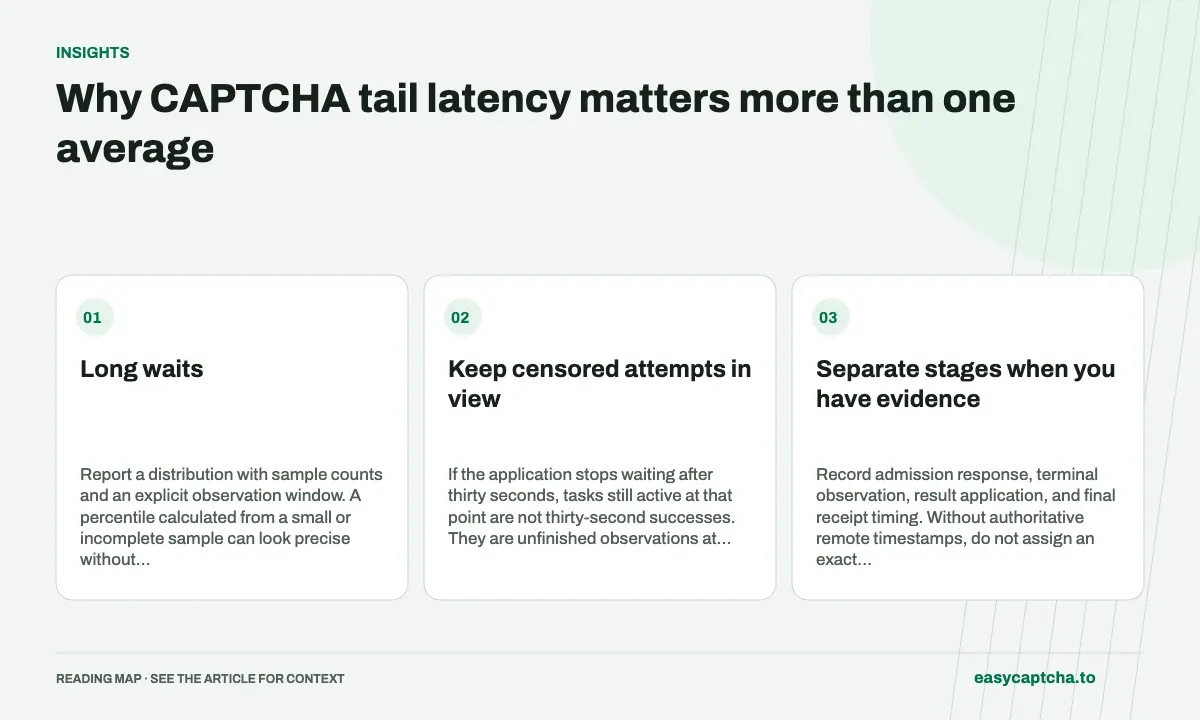 Latency analysis
Why CAPTCHA tail latency matters more than one average
Report slow completion, deadlines, observation coverage, and recovery alongside median behavior so rare waits are not hidden by a favorable mean.
Read article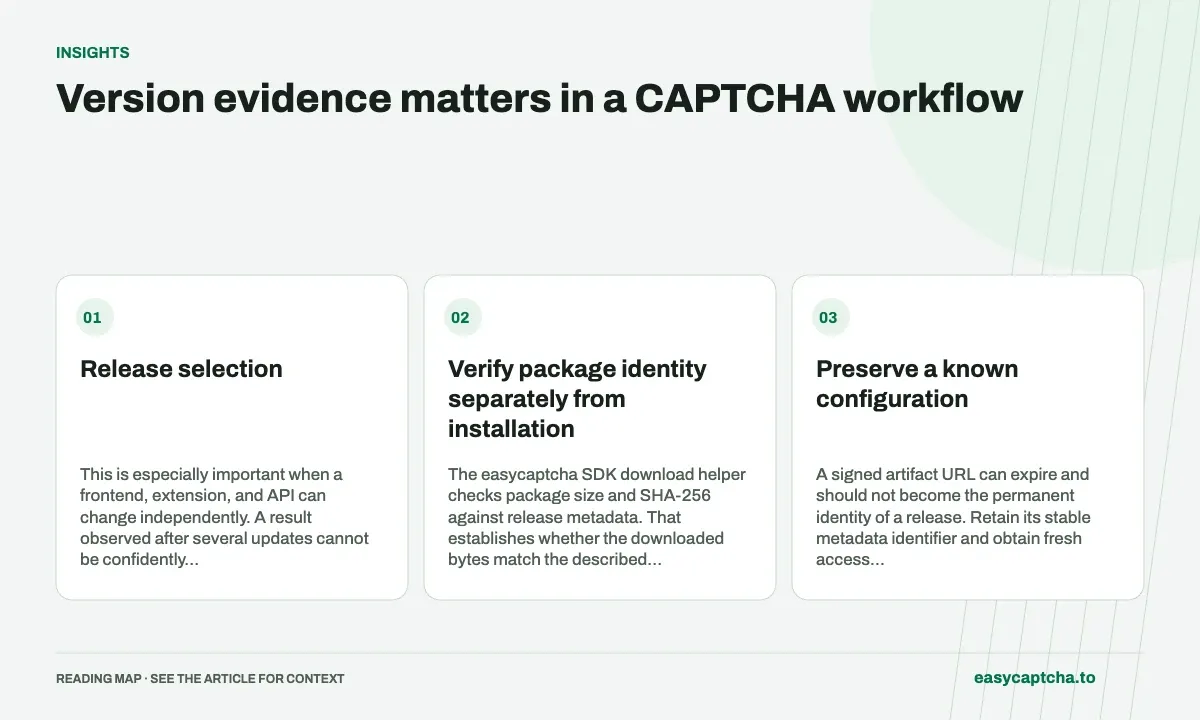 Release analysis
Version evidence matters in a CAPTCHA workflow
Tie an evaluation to the browser, extension package, configuration, and API contract actually used rather than a moving latest label.
Read article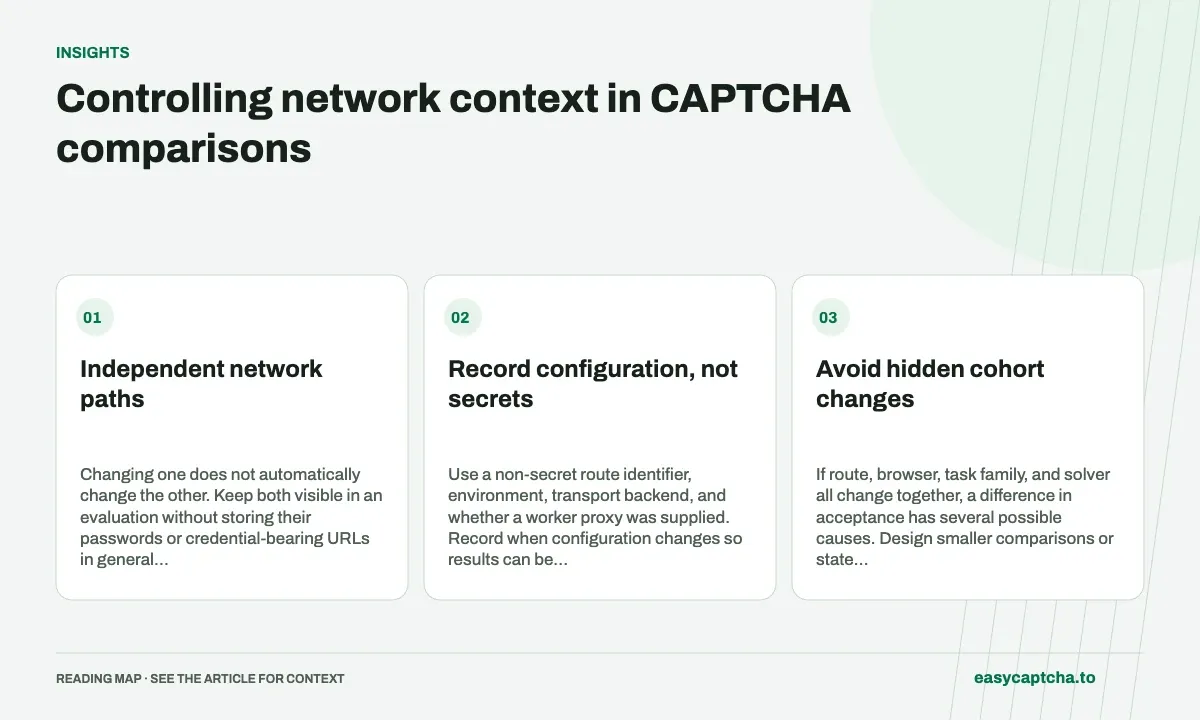 Evaluation design
Controlling network context in CAPTCHA comparisons
Track local transport and worker networking separately so route changes do not become unsupported claims about solver quality.
Read article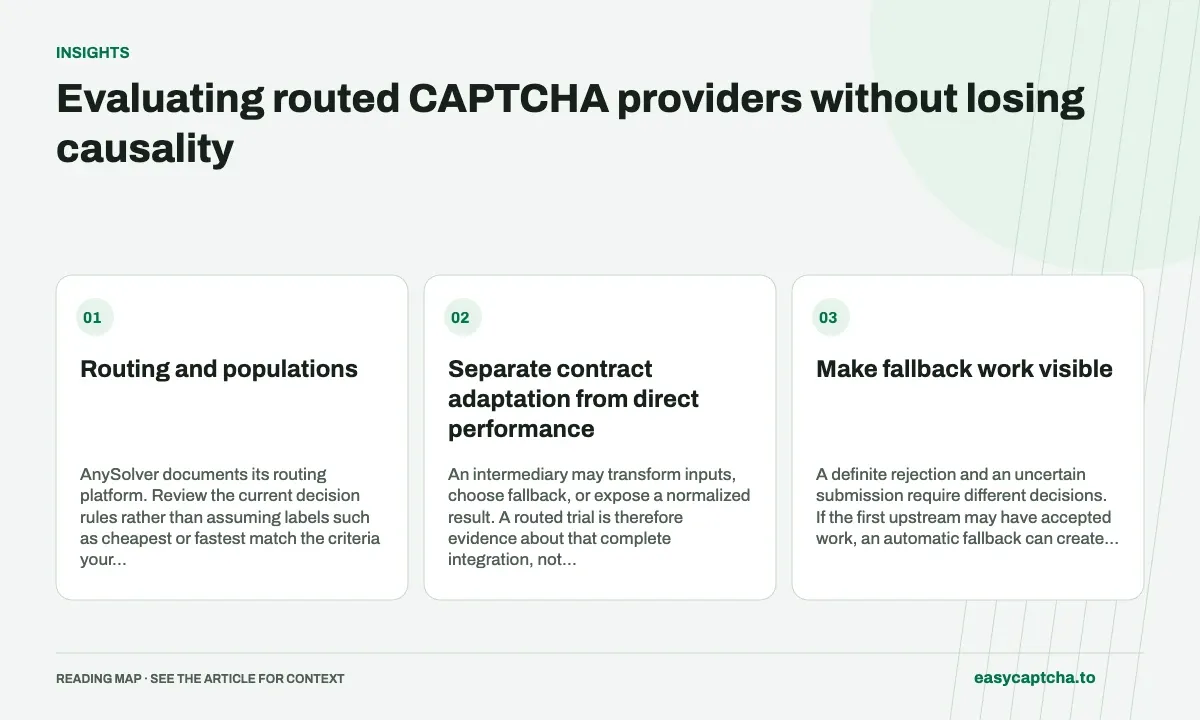 Market analysis
Evaluating routed CAPTCHA providers without losing causality
Keep selected providers, routing policy, task families, and unknown outcomes visible when comparing an aggregator with direct integrations.
Read article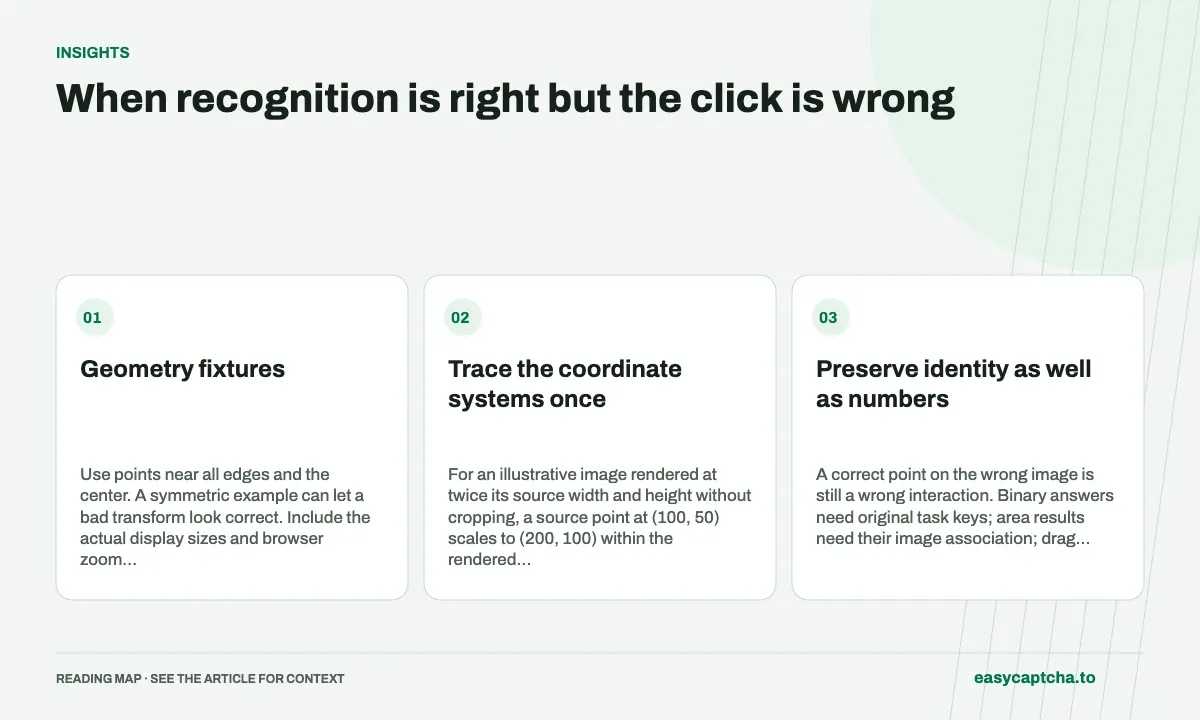 Recognition analysis
When recognition is right but the click is wrong
Trace image keys, dimensions, offsets, and movable identities to distinguish a UI mapping bug from an incorrect recognition result.
Read article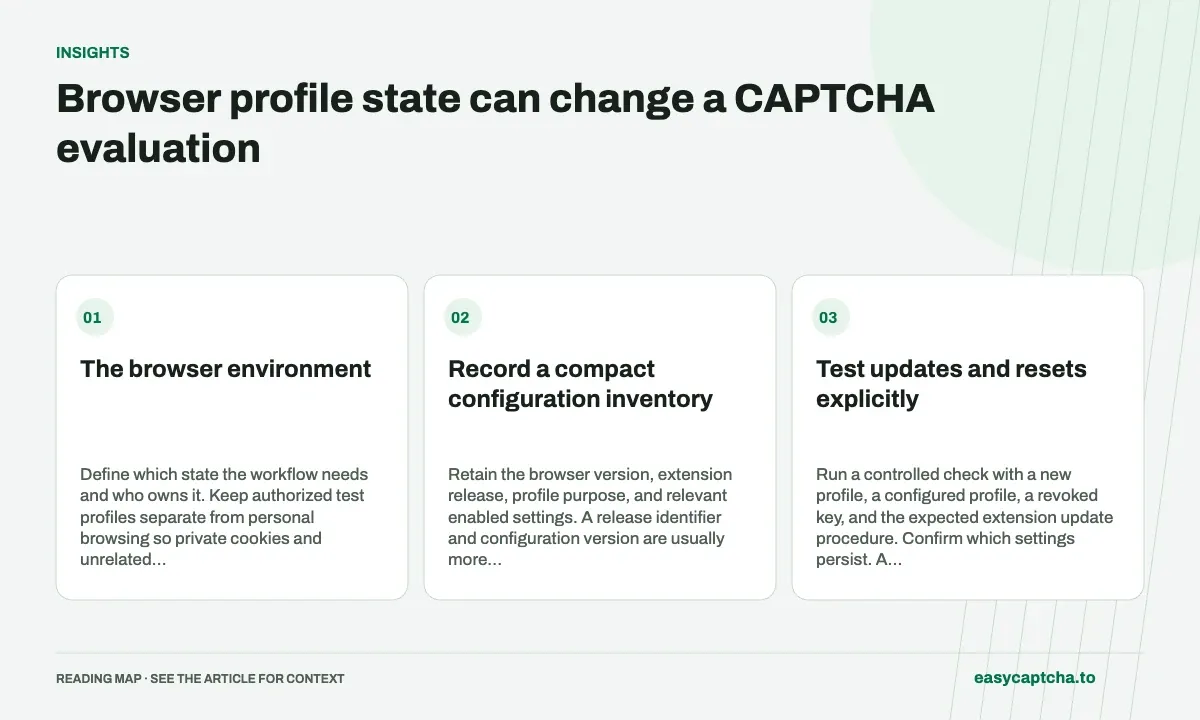 Evaluation hygiene
Browser profile state can change a CAPTCHA evaluation
Record browser, extension, settings, and permitted session state so a profile reset is not confused with a solver regression.
Read article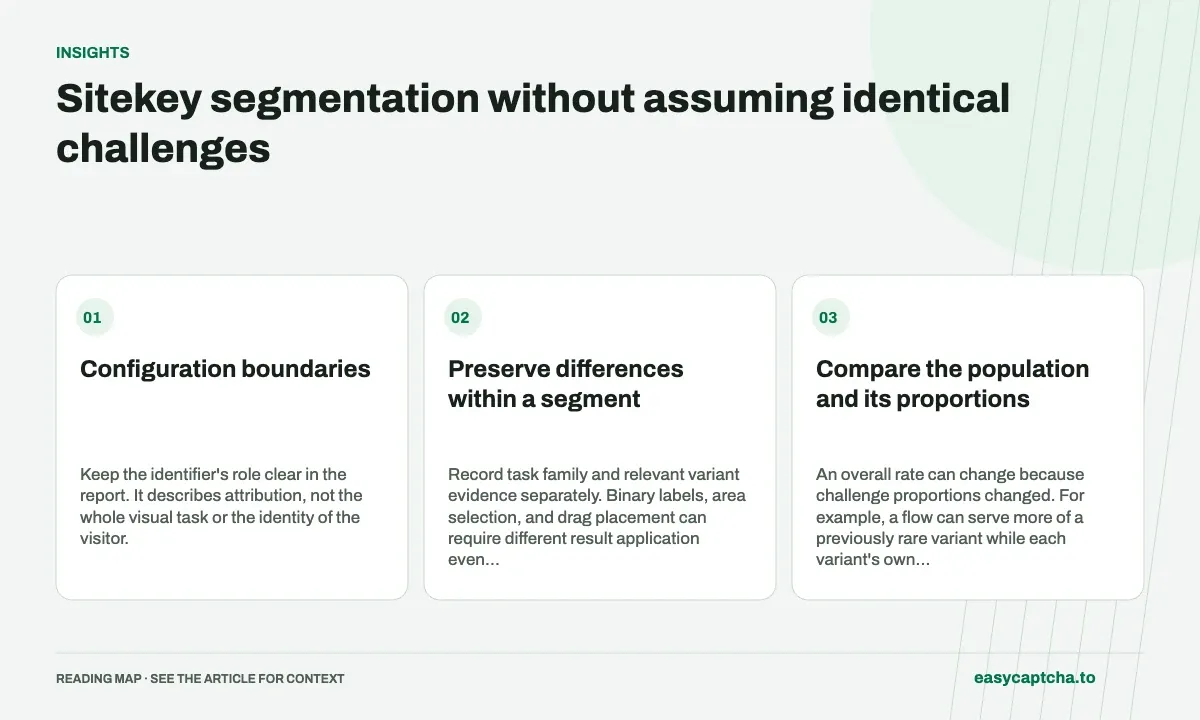 Challenge analysis
Sitekey segmentation without assuming identical challenges
Use public configuration attribution to separate flows while keeping task families, variants, and unknown outcomes visible within each group.
Read article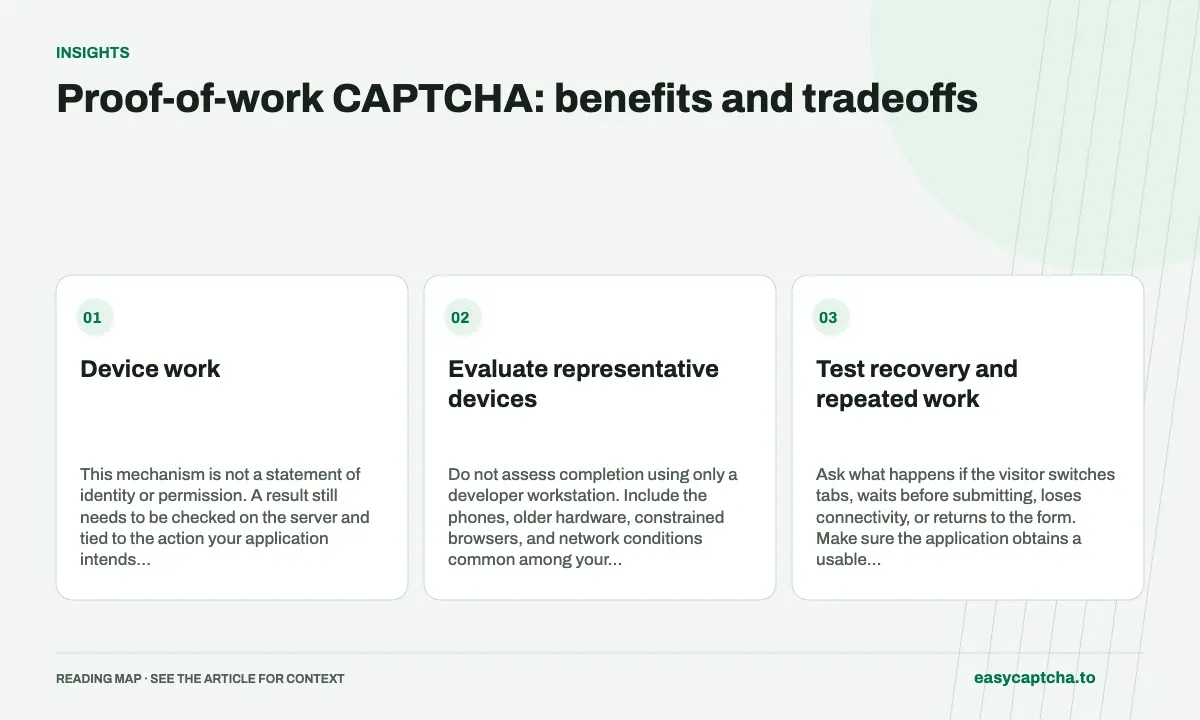 Challenge design
Proof-of-work CAPTCHA: benefits and tradeoffs
Understand how background computation changes CAPTCHA friction, and evaluate device performance, recovery, accessibility, and server-side enforcement.
Read article Challenge analysis
Measuring multi-round CAPTCHA completion honestly
Count groups, rounds, proofs, and final actions separately so a one-round recognition result is not reported as a whole successful challenge.
Read article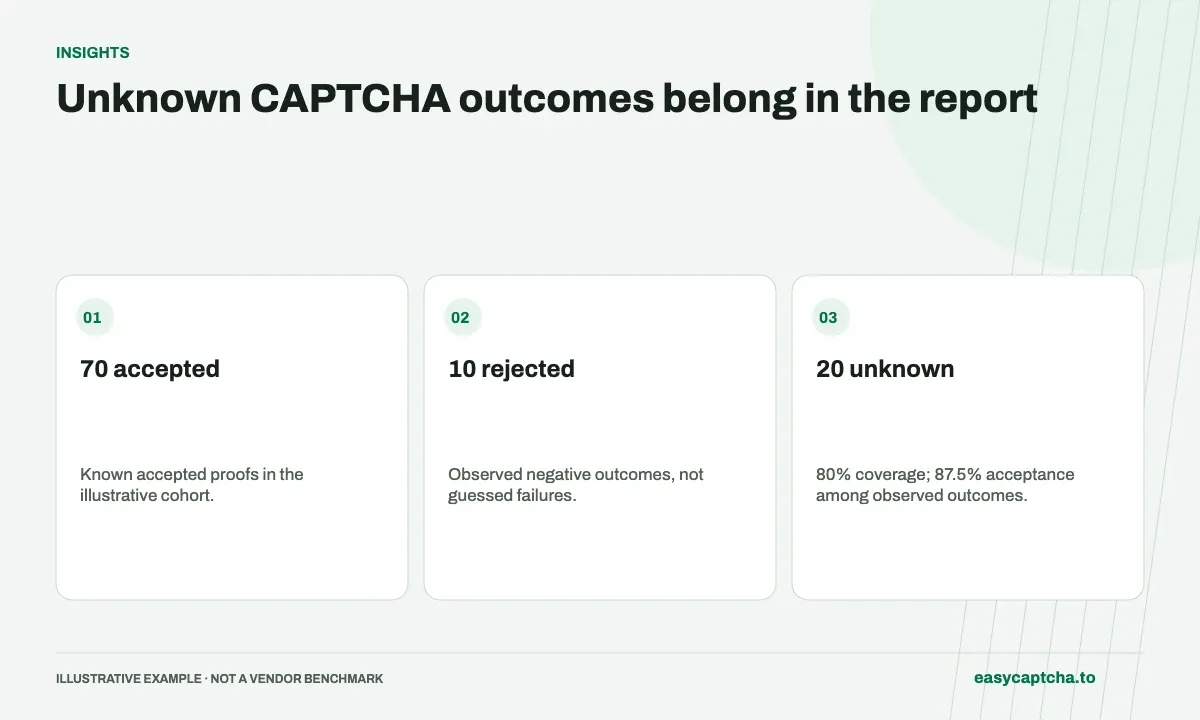 Measurement
Unknown CAPTCHA outcomes belong in the report
Keep timeouts, lost responses, and unfinished observations visible instead of forcing every attempt into success or failure.
Read article Evaluation hygiene
What staging can prove about a CAPTCHA deployment
Keep deterministic fixtures, provider configuration, browser policy, and live checks distinct so passing staging tests are not overstated as production performance.
Read article Market analysis
How to compare CAPTCHA vendors without inventing a winner
Match operations, disclose authorship and cohorts, preserve unknown outcomes, and distinguish documented features from controlled trial results.
Read articleLooking for the API contract?
The API reference covers request schemas, task results, errors, and authentication. Read pricing for the current billing units.
Get started with easycaptcha
Make hCaptcha easier.
Get recognition assistance in your Chromium browser, or build hCaptcha recognition and token workflows with our API and typed SDKs.
25 free recognitions a day in the extension. No account or payment required for the free plan.