Solver comparison
easycaptcha vs EZCaptcha: task input and integration scope
Compare easycaptcha hCaptcha tasks with EZCaptcha documented JSON creation, checking task families and required per-flow data before migration.
By the easycaptcha team · Published
EZCaptcha publishes task-creation documentation on the documentation site linked from its official website. The creation reference describes JSON clientKey, a task object, and provider-specific configuration.
Task definitions
easycaptcha’s customer API accepts hCaptcha recognition, regular tokens, and approved enterprise tokens. The two services should not be treated as equivalent simply because both use JSON requests and return task IDs.
Separate three configuration questions
First establish the provider and task family. Then establish the page’s public challenge configuration. Finally establish any flow-specific fields, such as action or enterprise data. A value meaningful in a reCAPTCHA task is not automatically the right field for an hCaptcha request.
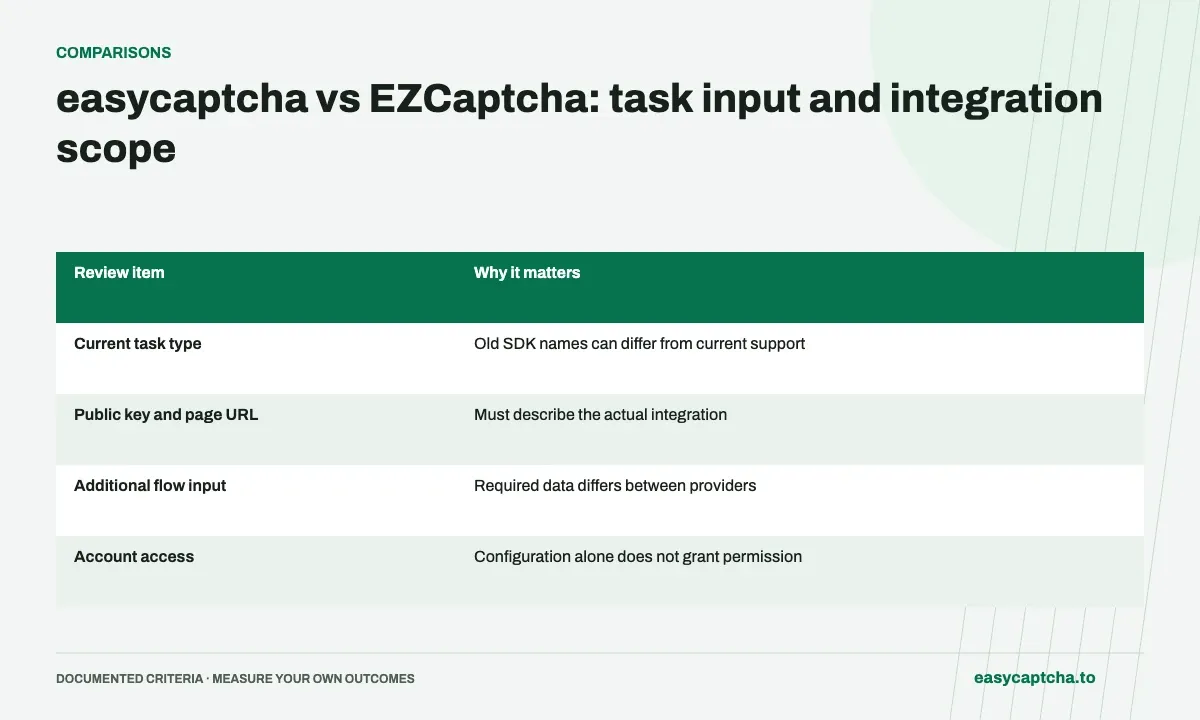
| Review item | Why it matters |
|---|---|
| Current task type | Old SDK names can differ from current support |
| Public key and page URL | Must describe the actual integration |
| Additional flow input | Required data differs between providers |
| Account access | Configuration alone does not grant permission |
Keep the customer’s account credential out of public-key fields. Changing credential placement also changes which parts of a request your logs need to redact.
Compare recovery and cost after schema mapping
Save a returned ID before waiting for a result. Distinguish uncertain creation from a definitive rejection, and avoid using a generic retry wrapper that creates extra paid tasks. Evaluate the real billing unit and selected mode rather than substituting one vendor’s headline rate for another product.
This comparison is written by the easycaptcha team and describes integration work, not a success-rate benchmark. Consult both current references and test an approved, representative flow. The sitekey guide separates public configuration from credentials; regular versus enterprise tokens explains easycaptcha’s entitlement boundary.
Frequently asked questions
What matters most in an EZCaptcha migration trial?
Confirm the required task definition and inputs, then evaluate actual outcomes and handling of pending or failed work.
Does this comparison guarantee matching provider coverage?
No. Compare each provider's documented task families and account eligibility for your intended workload before testing it.
How can I evaluate easycaptcha on my own workload?
Start with a small integration trial using representative hCaptcha tasks. Compare observed acceptance, final outcomes, and costs in the actual billing unit rather than relying on a feature table alone.